
Why This Course?
Create Awareness
Young people spend an average of 7 hours daily in front of screens. This course makes media consumption visible and reflectable.
Think Critically
Algorithms, fake news, AI-generated content – those who don't understand how they work are controlled by them.
Live Values
Technology is a tool. In the humanistic sense, we use it to strengthen human connection, not replace it.
6 Lessons – The Complete Course
Each lesson follows our NIL method: Story → Learning Goal → Task → Reflection → Transfer
1My Digital World – Taking Stock
📖 Story
Lena, 14, realizes one morning she spent 4 hours on her phone without noticing. She asks herself: Who actually decides what I see?
🎯 Learning Goal
Participants reflect on their own media consumption and recognize patterns.
✏️ Task
Keep a media diary: note for 3 days when, how long and why digital media are used. Then evaluate in the group.
💭 Reflection
What surprised me? Which habits do I want to keep, which do I want to change?
🚀 Transfer
Introduce one 'media-free evening' per week and document the experience.
2Algorithms & Filter Bubbles – Who Thinks for Me?
📖 Story
Tim notices his feed only shows content confirming his opinion. His friend sees completely different news on the same topic.
🎯 Learning Goal
Understand how algorithms work and how filter bubbles form.
✏️ Task
Experiment: Search the same topic on 3 different platforms and compare results. Document and present differences.
💭 Reflection
How does what I see influence what I think? How can I consciously seek different perspectives?
🚀 Transfer
Consciously integrate a news source with a different perspective into daily life.
3Artificial Intelligence – Tool or Replacement?
📖 Story
Sara uses ChatGPT for homework. Her teacher asks: 'Did you understand this or just copy it?' Sara is unsure.
🎯 Learning Goal
Understand AI as a tool and classify it ethically – what can AI do, what can't it?
✏️ Task
AI workshop: Have AI write a text, then improve it yourself. Comparison: What is AI missing? What can only humans do?
💭 Reflection
Where is AI helpful, where dangerous? What makes human thinking unique?
🚀 Transfer
Create a personal 'AI charter': What do I use AI for, what not?
4Social Media & Self-Worth – Am I What I Post?
📖 Story
Mia posts a photo and counts likes. 23 likes – is that good? Her mood depends on it. She asks herself: Why?
🎯 Learning Goal
Understand the connection between social media and self-esteem and set healthy boundaries.
✏️ Task
Role play: 'Influencer vs. real life' – reenact scenes and discuss. Then: Create own 'Real Talk' video (max. 60 sec.).
💭 Reflection
What do I show online, what not? Why? How do I feel when I don't post?
🚀 Transfer
For one week, consciously share only 'real moments' – no filters, no staging.
5Data Privacy & Digital Security – My Data, My Rights
📖 Story
Noah downloads a free app. It wants access to contacts, camera and location. Noah asks: If the app is free – what am I paying?
🎯 Learning Goal
Understand how personal data is collected and used, and know protective measures.
✏️ Task
Privacy check: Review own app permissions, remove unnecessary ones. Test password strength. Create a 'Digital Hygiene' checklist together.
💭 Reflection
What didn't I know about my data? What will I do differently from now on?
🚀 Transfer
Review privacy settings on all devices and explain to family.
6My Digital Compass – Using Technology with Values
📖 Story
The class discusses: Technology is neither good nor bad – it depends on how we use it. But how do I find my own way?
🎯 Learning Goal
Develop a personal 'digital compass' – use technology consciously and value-oriented.
✏️ Task
Final project: 'My Digital Compass' – create a personal manifesto (text, video or poster) describing own values in dealing with technology.
💭 Reflection
What do I take away from this course? How has my view of media and AI changed?
🚀 Transfer
Hang the 'digital compass' at home and check in 3 months: Am I sticking to it?
The Humanistic Difference
This is not a 'stay-away-from-media' course. The Humanistic School Switzerland knows: We live in a digital world. It's not about rejecting technology, but using it with awareness, ethics and human values.
Rooted in Nature – Ready for the Digital Future
We want children to be ready for the new digital world – without losing their connection to Mother Earth. Technology and nature are not opposites when lived in the right balance.
Nature Experiences as Foundation
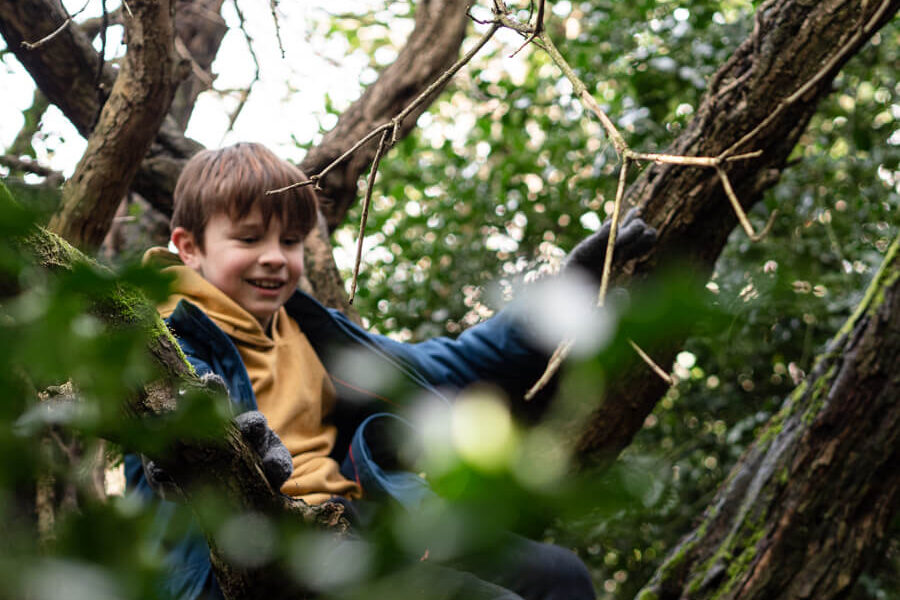
Every digital unit is accompanied by a nature experience. Climbing trees, tending gardens, observing animals – these experiences give children the inner stability they need in the digital world.
Digital Competence with Attitude
Understanding AI, seeing through algorithms, creating own projects – but always with the question: Does this serve people? Does it strengthen community? Does it respect creation?
Five Future Competencies
- 1. Critical thinking & source evaluation
- 2. Creative problem-solving with technology
- 3. Ethical judgement
- 4. Digital sovereignty
- 5. Connection to nature as anchor
In the Spirit of Amonashvili
"The child is a spiritual being who uses technology as a tool for their life's purpose – not the other way around. Programming with empathy, data analysis with nature observation, AI use with self-reflection."
Best Price Guarantee for Online Courses
Find the same online course cheaper at a comparable provider? We'll match the price – guaranteed. Quality at the best price.

Every course helps.
For every booked course and every book sold, the Humanistic School Switzerland donates CHF 5 to selected humanitarian projects as part of our international initiative.
"Learning and responsibility go hand in hand. Every course contributes to enabling concrete help on the ground."
Start Now
Sign up, pay securely with Stripe and start your course immediately.
14-day money-back guarantee • Instant access • Secure payment