
Why This Course?
Create Awareness
Young people spend an average of 7 hours daily in front of screens. This course makes media consumption visible and reflectable.
Think Critically
Algorithms, fake news, AI-generated content – those who don't understand how they work are controlled by them.
Live Values
Technology is a tool. In the humanistic sense, we use it to strengthen human connection, not replace it.
6 Lessons – The Complete Course
Each lesson follows our NIL method: Story → Learning Goal → Task → Reflection → Transfer
1My Digital World – Taking Stock
📖 Story
Lena, 14, realizes one morning she spent 4 hours on her phone without noticing. She asks herself: Who actually decides what I see?
🎯 Learning Goal
Participants reflect on their own media consumption and recognize patterns.
✏️ Task
Keep a media diary: note for 3 days when, how long and why digital media are used. Then evaluate in the group.
💭 Reflection
What surprised me? Which habits do I want to keep, which do I want to change?
🚀 Transfer
Introduce one 'media-free evening' per week and document the experience.
2Algorithms & Filter Bubbles – Who Thinks for Me?
📖 Story
Tim notices his feed only shows content confirming his opinion. His friend sees completely different news on the same topic.
🎯 Learning Goal
Understand how algorithms work and how filter bubbles form.
✏️ Task
Experiment: Search the same topic on 3 different platforms and compare results. Document and present differences.
💭 Reflection
How does what I see influence what I think? How can I consciously seek different perspectives?
🚀 Transfer
Consciously integrate a news source with a different perspective into daily life.
3Artificial Intelligence – Tool or Replacement?
📖 Story
Sara uses ChatGPT for homework. Her teacher asks: 'Did you understand this or just copy it?' Sara is unsure.
🎯 Learning Goal
Understand AI as a tool and classify it ethically – what can AI do, what can't it?
✏️ Task
AI workshop: Have AI write a text, then improve it yourself. Comparison: What is AI missing? What can only humans do?
💭 Reflection
Where is AI helpful, where dangerous? What makes human thinking unique?
🚀 Transfer
Create a personal 'AI charter': What do I use AI for, what not?
4Social Media & Self-Worth – Am I What I Post?
📖 Story
Mia posts a photo and counts likes. 23 likes – is that good? Her mood depends on it. She asks herself: Why?
🎯 Learning Goal
Understand the connection between social media and self-esteem and set healthy boundaries.
✏️ Task
Role play: 'Influencer vs. real life' – reenact scenes and discuss. Then: Create own 'Real Talk' video (max. 60 sec.).
💭 Reflection
What do I show online, what not? Why? How do I feel when I don't post?
🚀 Transfer
For one week, consciously share only 'real moments' – no filters, no staging.
5Data Privacy & Digital Security – My Data, My Rights
📖 Story
Noah downloads a free app. It wants access to contacts, camera and location. Noah asks: If the app is free – what am I paying?
🎯 Learning Goal
Understand how personal data is collected and used, and know protective measures.
✏️ Task
Privacy check: Review own app permissions, remove unnecessary ones. Test password strength. Create a 'Digital Hygiene' checklist together.
💭 Reflection
What didn't I know about my data? What will I do differently from now on?
🚀 Transfer
Review privacy settings on all devices and explain to family.
6My Digital Compass – Using Technology with Values
📖 Story
The class discusses: Technology is neither good nor bad – it depends on how we use it. But how do I find my own way?
🎯 Learning Goal
Develop a personal 'digital compass' – use technology consciously and value-oriented.
✏️ Task
Final project: 'My Digital Compass' – create a personal manifesto (text, video or poster) describing own values in dealing with technology.
💭 Reflection
What do I take away from this course? How has my view of media and AI changed?
🚀 Transfer
Hang the 'digital compass' at home and check in 3 months: Am I sticking to it?
The Humanistic Difference
This is not a 'stay-away-from-media' course. The Humanistic School Switzerland knows: We live in a digital world. It's not about rejecting technology, but using it with awareness, ethics and human values.
Rooted in Nature – Ready for the Digital Future
We want children to be ready for the new digital world – without losing their connection to Mother Earth. Technology and nature are not opposites when lived in the right balance.
Nature Experiences as Foundation
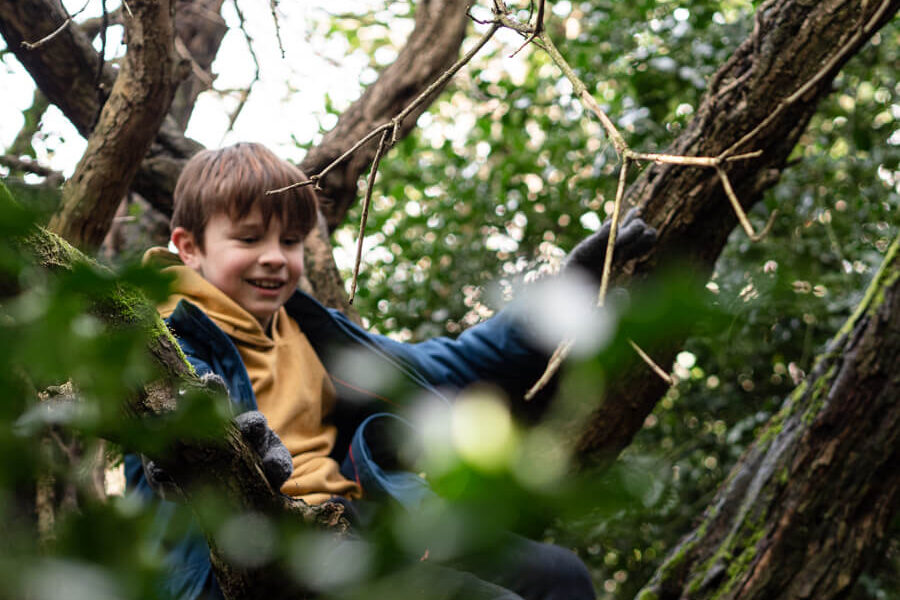
Every digital unit is accompanied by a nature experience. Climbing trees, tending gardens, observing animals – these experiences give children the inner stability they need in the digital world.
Digital Competence with Attitude
Understanding AI, seeing through algorithms, creating own projects – but always with the question: Does this serve people? Does it strengthen community? Does it respect creation?
Five Future Competencies
- 1. Critical thinking & source evaluation
- 2. Creative problem-solving with technology
- 3. Ethical judgement
- 4. Digital sovereignty
- 5. Connection to nature as anchor
In the Spirit of Amonashvili
"The child is a spiritual being who uses technology as a tool for their life's purpose – not the other way around. Programming with empathy, data analysis with nature observation, AI use with self-reflection."
รับประกันราคาดีที่สุดสำหรับคอร์สออนไลน์
พบคอร์สออนไลน์เดียวกันในราคาถูกกว่าจากผู้ให้บริการที่เทียบเคียงได้? เราปรับราคาให้ – รับประกัน คุณภาพในราคาดีที่สุด

ทุกคอร์สช่วยเหลือ
สำหรับทุกคอร์สที่จองและหนังสือทุกเล่มที่ขายได้ โรงเรียนมนุษยนิยมสวิตเซอร์แลนด์บริจาค 5 CHF ให้กับโครงการด้านมนุษยธรรมในกรอบโครงการระหว่างประเทศของเรา
«การเรียนรู้และความรับผิดชอบเป็นของคู่กัน ทุกคอร์สมีส่วนช่วยให้เกิดความช่วยเหลือที่เป็นรูปธรรม»
Start Now
Sign up, pay securely with Stripe and start your course immediately.
14-day money-back guarantee • Instant access • Secure payment